Hard and Soft Skills
Most people have a combination of hard skills and soft skills. What are hard and soft skills? In its most basic form, skills are the ability to do a task. Hard skills are honed by years of education and experience, for example, the skills of a renowned heart surgeon or a carpenter whose expertise is making fine furniture. Soft skills are something that comes naturally or intuitively, for example, the ability to cultivate a productive vegetable garden or the ability to find pleasure in planning a successful birthday party.
Knowing what your hard and soft skills are will contribute to your self-esteem and your confidence.
Hard Skills
Hard skills are developed through formal education, on-the-job training, internships, a residency, apprenticeships, or certificate programs. Though you may have a knack for carpentry, you were not born knowing how to use a nail gun. Someone taught you how to do that.
Careers and professions are based on the use of hard skills, skills that have been taught and learned. Perhaps there is a certificate or diploma on the wall. You, as a customer, consumer or patient, will benefit from the knowledge and experience someone has obtained through perseverance and hard work.
The person with a hard skill could have obtained their skills from an apprenticeship, graduated from Harvard or completed Hamburger University at McDonald’s Corporation. Hard skills are taught and learned.
Being able to identify your hard skills improves your self-esteem by recognizing what you put time and effort into learning.
Professions Requiring Hard Skills
- Automotive repair
- Behavioral health field (clinical social worker, psychiatrist, psychologist)
- Business management and ownership (landlord, marketing, sales)
- Carpentry
- Computer industry (data analysis, graphic design, IT, website development)
- Education (teaching)
- Finance (accounting, banking, investing)
- Health care field (doctor, nurse, dentist)
- Legal field (lawyer, judge, paralegal)
- Trades (electrical, plumbing, welding)
Soft Skills
“Soft skills get little respect, but they will make or break your career.”
Peggy Klaus
Recognition of soft skills generally comes early in life and may influence what that person does for their life’s work. If someone enjoys and finds math calculations “easy,” that person may choose to become an accountant or work in the financial industry.
While some soft skills can be formally taught through education or an apprenticeship, the overwhelming percentage of soft skills are intuitive, skills you are born with. If one of your soft skills is motivational leadership, you will be able to be a motivational leader at your very first job flipping burgers, all the way to being the CEO of a multimillion-dollar corporation.
Soft skills are not restricted to any specific field. For example, you might have the soft at being proficient at de-escalating tense situations. You could use that skill as a hostage negotiator, a service writer at a car dealership or a high school principal. These are all jobs with different levels of intensity, but all require someone who can be cool and calm in stressful situations.
While you can be taught de-escalation skills, most people who are good at this skill come by it intuitively. It is a sixth sense. Identifying your soft skills will help you improve your self-esteem. These soft skills are part of your core knowledge base that you can transfer from job to job, situation to situation.
Soft Skills and Potential Professions
- Analytical / critical thinking (legal field)
- Communication / planning / team builder (educator)
- Creative / open-minded / innovator (entrepreneur)
- Negotiation / strategic planning (financial field)
- Collaboration / decision maker (medical field)
- Conflict resolution / good listener (behavioral health field)
- Leadership / delegation / motivator (management)
- Detail-oriented / organizational skills (computer field)
- Time management / stress management (business owner)
- Problem solver / works well under pressure (trades)
The Impact of Skills on Self-Esteem and Confidence
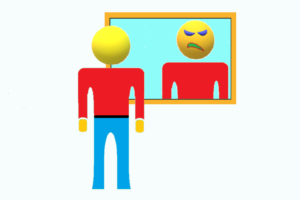
Self-esteem is how you feel about yourself. It is internal. For example, “I feel good about myself.” “I can do this.” “I have the knowledge to complete this task.” While you can allow others to negatively impact your self-esteem, only you can build your self-esteem. Someone can tell you 1,000 times how smart you are, but unless you believe it internally, it won’t be true to you.
Confidence, on the other hand, is what others see when they look at you. It is external. Internally you may be terrified to give a speech or make a presentation. But if you are portraying confidence, your voice is calm and robust and your body language is powerful and dynamic.
When you are able to recognize your behavior or actions as skills, you will be able to build your self-esteem and confidence. Sometimes when behaviors or soft skills “come too easily,” they don’t seem like skills at all!
Summary
Seeing a behavior or action as a soft skill can boost your self-esteem and confidence. But first you have to recognize a behavior or action as a skill! It is so easy to take something that comes naturally to you for granted! Remember, professions frequently need both hard and soft skills for someone to be productive.
If you are looking for ideas on how you can identify your hard and soft skills and how they may impact your self-esteem and confidence, please refer to my book, Stop Being Your Own Worst Critic: How to Use Affirmations and Journaling to Improve Your Self-Esteem.
With warmest regards,
Thank you so much for reading this blog. If you enjoyed the content, please check out other blogs at:
RelationshipsRelearned.com
RVingNomads.com
In addition to blogs and articles, I have written a series of self-help books called The Personal Empowerment Series and a fictional series named The Charlotte Novella Series. To view my books and novellas I have written, please go to my Amazon Authors Page.
To be notified of future posts, please enter your email address and click on the Subscribe button.
If you live in the State of Maine or Texas and seeking individual therapy, please go to my Concierge Therapy website: KathrynMaietta.com
| AI has not been used to create any content for my website, articles, blogs or books. All material is original unless otherwise noted. All photos and graphics within my website and blogs were taken or created by David Harrington or Kathryn Maietta. |