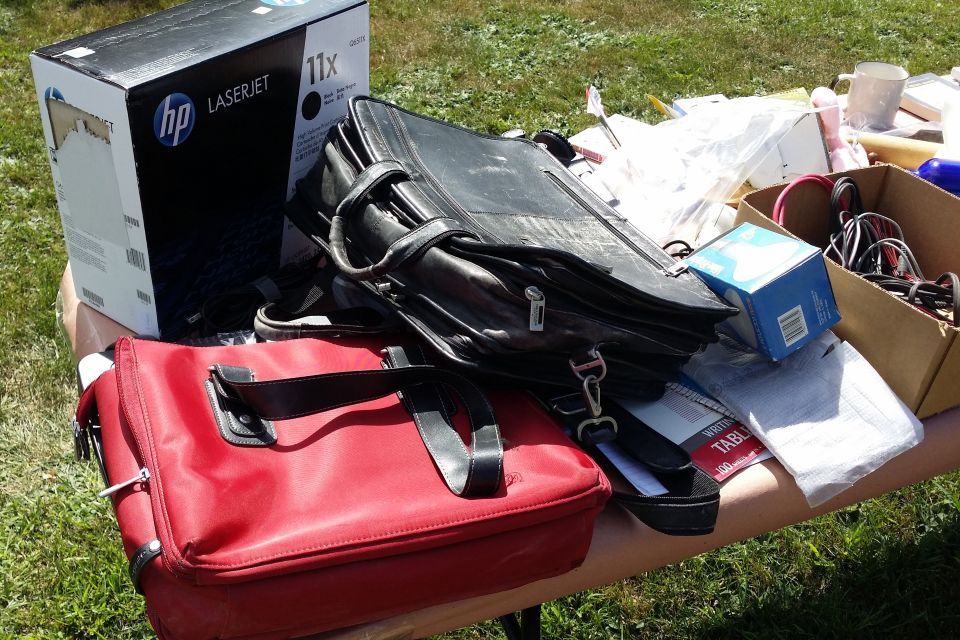
There have been a lot of movements within the past few years about living a more minimalist lifestyle. One movement is Marie Kondo’s “spark joy” method that focuses on eliminating anxiety-inducing possessions and frees up mental and physical space. Yes, less clutter can improve your mental health.
Clutter, Purchases and Stress
Recently, there has been research focusing on how clutter in your home can actually elevate your cortisol, your stress hormone. The idea is based on looking around and seeing clutter in your home putting your nervous system on high alert. If this is true, and I believe it is, clutter can actually be hurting your mental health.
Think about it this way: do you ever experience guilt from making “bad” purchases? Things that didn’t work out the way you thought they would? Do you ever feel guilty or have “buyer’s remorse” for purchasing something you really didn’t need? Then do you feel guilty or embarrassed to return the item?
Are there purchases, perhaps hanging in your closet or sitting on a shelf, that still have the tags on them? Do you feel guilt from having spent the money but not using these items? Letting go can be hard. But letting go of these unused items can help break the cycle of guilt from bad purchases. And it can reduce the mental burden of maintaining unused items.
Removing clutter and unused items can actually lead to a calmer, less anxious environment and life.
Creating Value
If you look at an item in your home and cannot say it brings you pleasure, it is time to move that item along. It does not have value for you. Maybe you give it to a friend, donate it, sell it, or just throw it in the trash.
Every item in your home is assigned a value of “YES” or “NO”. This applies to belongings, commitments, and sometimes relationships that bring more “noise” than value.
Paradigm Shift
While there is a lot of discussion about eliminating things that do not give you pleasure, and this blog is one of them, it really is all about a paradigm shift of identifying the items you love and keeping those items.
The first thing to think about is that you probably only use 10% of the things you own. Forty percent of the “stuff” you own you use infrequently. That means you can probably get rid of 50% of your stuff and not miss it at all!
To know more about a paradigm shift, please visit my article The Paradigm Shift
Starting the Process
Over the last few decades, I have moved several times. Prior to moving, I have always used the same process for downsizing. I always started by putting two large moving boxes, a 30-gallon garbage can and my paper shredder in the corner of the living room. Every day I made a goal of finding twenty-four items:
- 6 things to throw away in the garbage can
- 6 things to put in a moving box to donate
- 6 things to put in a moving box to sell
- 6 pieces of paper to shred
The garbage can items were always pretty easy to find. They were items that were tattered, ripped, stained, or broken. You can start with expired items, for example, spices, antibiotic cream, etc.
The donate and sell boxes included items that were out of style, items that had not been used for a couple of years, clothing that no longer fit properly, or items that evoked negative memories. You could also put duplicates of items in these boxes.
The shredder was available for outdated bank statements, car insurance policies and insurance explanations of benefits.
You may want to have another box where you keep sentimental items you want to keep, but have not used in a while, for example, photo albums.
Admittedly, it can be difficult to declutter. But sometimes you have no choice. You are moving into a smaller space, or you just can’t easily walk through your living room anymore.
The Fire Method of Decluttering
One idea for decluttering is to look at a drawer, a closet or a room, and as horrible as it seems, think about what would happen if there was a fire in that area. Of the things in the drawer, closet or room, how many things would you actually replace?
Research suggests that it is unlikely you would actually replace 50% of the items in that space! If that is true, it should be pretty easy to find items to put in your sell, donate, or throw away containers. Those are your high-value items you should keep.
The Ten-Minute Method of Decluttering
No, this technique isn’t about spending ten minutes decluttering.
This is a method that takes its motivation from an impending disaster: a flash flood, a tornado, a wildfire. A wildfire is headed your way; you now have 10 minutes to gather what is important to you. What would you take? What would you leave?
Figuring out what you would take with you in the event of a natural disaster gives you an instant priority list of your things.
The 50% Rule
Pick a drawer or a closet, or if you are really ambitious, a room. Touch every item in the space (drawer, closet, room). If you are using the 50% Rule, 50% of the items you touch will go in the donate, sell, or throw away boxes.
With this method, 50% will find another home.
The “Pack It Away” Test
Pack up half of the items in a room, for example, decorations or kitchen items. This will be a group of things about which you are ambivalent. You haven’t used them, but they still linger after your best attempts at decluttering.
Put these items in a cardboard box. Tape the box shut and label the box with the day’s date, for example, 9/8/26. Depending on your time frame, also write another date on the box, maybe 30, 60 or 90 days from 9/8/26.
Option One: On your designated date, without opening the box, take that sealed box to the Goodwill, Salvation Army or Habitat for Humanity ReStore. If you haven’t thought about or used an item from the box, there is no need to look it over again.
Option Two: On your designated date, open the box and decide if you really want to keep, donate or sell the items in the box.
Tips for Success
- Don’t overthink: If it’s broken, a duplicate, or unused, eliminate it.
- Digitize: Take photos of sentimental items rather than keeping the physical photo.
- Be flexible: If 50% feels too high, use it as a guide, not a strict rule.
- Prioritize: One thing in, one thing out. If you buy something new, something has to go.
Summary
I understand that getting rid of clutter can be difficult. We all have an emotional attachment to our “stuff.” But if we only really use less than 50% of the stuff in our house, what is the purpose of keeping the other 50%? You might need it later? That is great if you can find it! Is it wasteful? Actually, others can probably use whatever it is that you are donating or selling. And who couldn’t use a few extra bucks from selling things just lying around their house?
Related blogs I have written concerning things that do not give me pleasure is: Shiny Object Syndrome and FOMO
With warmest regards,
Thank you so much for reading this blog. If you enjoyed the content, please check out other blogs at:
RelationshipsRelearned.com
RVingNomads.com
In addition to blogs and articles, I have written a series of self-help books called The Personal Empowerment Series and a fictional series named The Charlotte Novella Series. To view my books and novellas I have written, please go to my Amazon Authors Page.
To be notified of future posts, please enter your email address and click on the Subscribe button.
If you live in the State of Maine or Texas and seeking individual therapy, please go to my Therapy website: KathrynMaietta.
| AI has not been used to create any content for my website, articles, blogs or books. All material is original unless otherwise noted. All photos and graphics within my website and blogs were taken or created by David Harrington or Kathryn Maietta. |






Leave a Reply
Your email is safe and will not be shared.